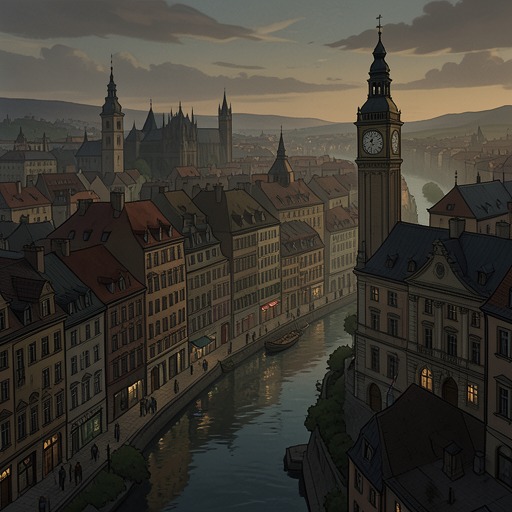
You belong to me and all Paris belongs to me
A Moveable Feast“You belong to me and all Paris belongs to me” is a thought the narrator forms while watching a woman in the street, and its decisive turn is the final reversal: as he claims her and Paris, he gives himself to the notebook and pencil. The expression converts a passing attraction into a private imaginative possession, then places that possession within the work of writing.
The Woman and the Claim
The narrator is disturbed and excited by the woman, and wishes he could put her into his story. But she has positioned herself to watch the street and the entry, and he understands that she is waiting for someone. His declaration therefore answers a desire that cannot become an encounter: he addresses her inwardly while recognizing that her attention is directed elsewhere.
The claim is explicitly conditional and private. He has seen her, but does not know who she is or whom she awaits; he even imagines that he may never see her again. “You belong to me and all Paris belongs to me” does not describe a relationship or a literal act of possession. It gives imaginative form to a momentary attraction that the narrator cannot pursue in the scene.
Paris, the Notebook, and the Reversal
The phrase widens abruptly from one woman to an entire city. Paris becomes part of the narrator’s inward claim, as if the intensity of looking could make the surrounding world his. Yet the sentence does not end with his ownership of either the woman or the city. It concludes, “and I belong to this notebook and this pencil.” The parallel clauses reverse the direction of possession: the narrator claims the subjects of his attention, but places himself in the service of the objects through which he writes.
That reversal makes the notebook and pencil more than incidental tools in the expression. They are the point at which desire becomes composition. The woman remains outside the story’s reach as a person waiting for someone else; the notebook, by contrast, is where the narrator can carry the moment into language. The phrase’s emotional force comes from holding these conditions together—an expansive claim over Paris and a firm acknowledgment of the writer’s attachment to his work.
Place in the Writing Scene
The thought occurs during a pause in a story’s composition. The narrator looks up at the woman while writing, then returns to the page and becomes absorbed in the story. He eventually finishes it without looking up or attending to the time. When he searches for the woman afterward, she has gone; he hopes she has left with a good man, but feels sad. The expression thus stands at a hinge between observation and immersion: the woman briefly enters his imaginative possession, while writing carries him away from the scene itself.
The passage does not confirm that the woman becomes a character in the completed story. Instead, it leaves the connection at the level the thought establishes: she has stirred the narrator and belongs, for that instant, to his imagination. The phrase also anticipates the scene’s quiet contrast between the intensity of creation and the loss of the occasion that prompted it. By the time the story is finished, the woman is absent, but the narrator’s attachment to the notebook and pencil has endured through the act of writing.